EUR.1 document and certificate of origin – when they are needed and why they directly affect import costs
In international trade, many decisions that seem purely formal have a direct impact on costs. One of the best examples is the certificate of origin, especially the EUR.1 document.
In practice, this is not just a customs document. It can determine whether you pay full customs duties or benefit from preferential rates.
At Pacia, we regularly encounter situations where missing or incorrect origin documents create additional costs or complications during customs clearance.
That is why it is important to understand how EUR.1 works in practice and when it can actually be used.
Key information about EUR.1
What is the EUR.1 document
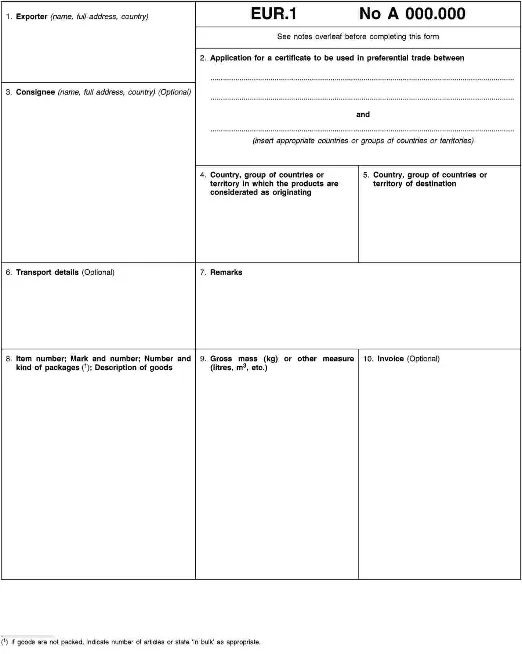
EUR.1 is a preferential certificate of origin that allows reduced or zero customs duties under EU trade agreements.
Who issues EUR.1
The document is issued at the exporter’s request and approved by customs authorities based on proof of origin documentation.
Importance of the supplier declaration
The supplier declaration confirms the preferential origin of goods and is one of the most important documents required for EUR.1.
Most common problems
The most common issues involve incorrect assumptions about origin, missing documents or lack of preparation for inspections.
EUR.1 vs invoice declaration
In some cases, EUR.1 may be replaced by an invoice declaration, but this requires a specific exporter status.
For most companies, the standard solution remains the EUR.1 document.
EUR.1 vs standard certificate of origin
EUR.1 allows preferential customs treatment, while a standard certificate of origin only confirms the country of origin.
Having a regular certificate of origin does not automatically mean lower customs duties.
Where problems most often occur
Many companies assume that every product exported from the EU automatically has preferential origin. In reality, production location and component origin are crucial.
Another common issue is missing supplier declarations or other proof of origin documents.
Problems may also arise during inspections in the importing country when additional confirmations are requested.
How Pacia supports clients
At Pacia, we help verify whether customs preferences can be applied and which documents are required.
We support clients in preparing documentation and communicating with customs agencies and authorities.
This allows decisions regarding EUR.1 to be made consciously and early enough in the process.
Summary
The EUR.1 document and certificate of origin have a real impact on import costs and customs clearance procedures.
Missing or incorrectly used documents may result in higher costs and customs complications.
A properly prepared process allows companies to benefit from customs preferences and avoid unnecessary issues.