
Legalization of Certificates of Origin
Legalization of certificates of origin and export documents
A certificate of origin is a document confirming the country in which a given product was manufactured or produced. This document is often required when exporting goods outside the European Union.
For the certificate to be legally valid, it must be legalized by the Customs Office or the Chamber of Commerce. Without this step, the document may be rejected by the recipient or by customs authorities in the importing country.
At Pacia, we handle the complete legalization of certificates of origin and other export documents, ensuring compliance with applicable regulations.
Types of certificates of origin
The most common types are EUR.1, A.TR and the standard certificate. Each serves a different purpose depending on the export destination and the applicable trade agreements.
Why the document must be legalized
A certificate of origin must be legalized by the Customs Office or the Chamber of Commerce before it can be presented to the recipient or to customs authorities in the importing country – without legalization, the document has no legal effect.
Legalization of certificates and SANEPID applications
We handle the legalization of certificates of origin and the preparation of SANEPID (PSSE) applications, required for the export of certain categories of goods.
EORI registration and vehicle approval
We help with the registration and assignment of an EORI number in the PUESC system, as well as with the approval of vehicles for customs transport.
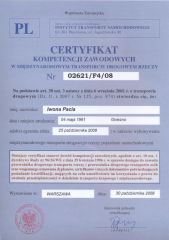
Comprehensive handling of export documents
A certificate of origin that has not been legalized can delay delivery of the goods or prevent you from benefiting from preferential customs rates.
That is why it is worth taking care of document legalization before shipping goods abroad.
At Pacia, we support clients at every stage – from choosing the right certificate, through legalization, to the preparation of other export documents.